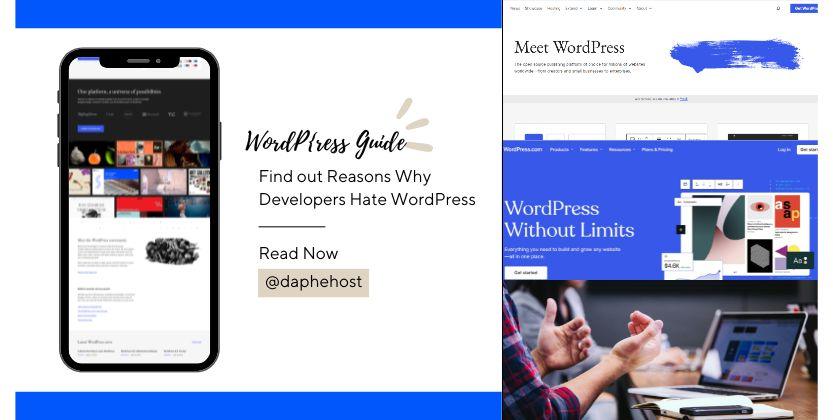
WordPress is known for its powerful and adaptable platform that serves as the content management system (CMS) for millions of websites around the world. However, for some web developers, WordPress is not their cup of tea with its simple interface and wide range of extensions which provides for both those who are new to web development as well as professional and experienced developers. In this blog, we will look at 10 reasons why a number of developers hate WordPress and avoid creating website using WordPress.
We have explained detailed on What is WordPress, WordPress.com vs WordPress.org. Also, if you are interested to learn about web-hosting we suggest to read- what is web hosting and what are different types of web hosting. In addition, we also have created an article on what is domain name and what are different types of domain names.
Table of Contents
Toggle10 Reasons Why Developers Hate WordPress
Checkout some of the reason on why developers hate WordPress Platform and suggest to different alternative platforms or hire a developers. Learn 10 reasons on why developers hate WordPress platform.
01
WordPress Development Challenges
WordPress developers face a number of challenges when developing websites. They have to understand WordPress themes and how to customize them. It is difficult to settle on the desired theme due to the availability of huge number of themes with different features that may not be relevant for a particular project. WordPress themes may also pose problems to developers since they must have knowledge of theme development and customization techniques before starting off.
02
Heavy Dependency on Plugins
Many people are fond of using heavy-duty themes laden with WordPress plugins such as sliders, parallax effects among others which make them visually attractive if carefully used during project launch. However, an individual should take note that without such features these websites would not look as impressive. If this will be your starting point in learning more about these features, you are in the right hands.
03
Themes Complications
Developers often hate WordPress platform because it is not user-friendly as it feels. The major reason is difficulty of customization of themes, because it arise variety of issues, also contributes to the situation. Obsolete approaches to programming are common in countless themes; they cause bloated and non-efficient coding. Overuse of plugins, code that doesn’t meet required standards, and fixed patterns make customization harder and more time-consuming. Moreover, themes come with bloated code on unnecessary features regularly as with resultant negative performance effects.
04
Security is Major Concern
Most of their themes and plugins are poorly coded and outdated so that they can easily be hacked into; therefore, it is necessary for an individual who wants his information kept safe to avoid downloading such files themes or plugins when looking for something online because they will make his system prone to attacks. Developers have to make sure all of these things work with each new version of their software too even if they add nothing new but rather appear as huge pieces full of backdoors waiting for someone’s attention.
It is important to mention that depending on too many plugins increases the chances of both conflicts and vulnerabilities because each new plugin means another potential loophole that can be detected during security testing.
05
Performance and Scalability
A lot of websites could get along with WordPress. However, this software sometimes lags behind when it comes to performance and flexibility especially in cases where data is too much or there are instances of high traffic. For this reason, developers have to come up with mechanisms that would ensure that their web sites run well all times.
06
Updates and Compatibility
For security and performance, keeping WordPress, themes, and plugins updated is vital. Nevertheless, this updates may bring forth compatibility challenges that lead to interruption of services at a developers end.
07
Lack of Full Control
Although WordPress is customizable, its customization is limited. It is hard for developers to put some particular features in place if they compare it to custom-built solutions for the same site.
08
Learning Curve
It might take people who don’t know much about WordPress very much time to learn how to use it. In adopting the specific platform and its surroundings, programmers might require some time
09
Quality of Codes
WordPress themes and plugins have been critiqued by developers for having poor code quality. When development doesn’t adhere to best practices there may be incompatibility problems and difficulties in maintenance.
10
Expectation of Users
Dealing with clients’ expectations may be challenging, especially when they do not fully understand the process of customization or believe that there are no limits to what can be done in WordPress.
Do Real Developers Use WordPress?
Many Developers does hate WordPress Platform due to its above reasons but it is a powerful and versatile platform that many real developers love using WordPress platform. Let’s discuss some reason on why still real developers use WordPress.
01
Popularity and Demand Worldwide
WordPress powers more than 40% of all website globally, making the platform the most dominant in website development. Also many clients request developer to create website on WordPress because of its popularity and easy user interface. Developer likes using WordPress platform to meet market demand Client preference.
02
User Friendly Interface
With their user friendly interface even a non-programmer or beginner can create their website and blog. As developers they can easily use this platform as they can easily understand how it works and how clients can can use the website panel to manage the content and bring normal changes into their website. WordPress platform does provide unlimited libraries and pre-built tools allowing developer to create and design website quickly making them efficiency for many projects.
03
Customization and Support
WordPress does provide unlimited control based on clients demands. Therefore, they have advanced customization options with active community of developers, designers and available best support to their users through forums, tutorials, theme and plugin developers. With WordPress regular updates and improvement, this platform stays with web standard, improving their security practices and adding new features.
04
Search Engine Optimization
WordPress is designed with better optimization for Search Engines. To enhance website’s SEO, the platform provides high quality themes and plugins you can use easily so they can just focus on creating, designing, and managing.
05
Open Source CMS
WordPress is a Free and Open Source Content Management platform that allows developer to modify and expands its functionality that can fit your specific needs. It can be the best solution for developers due to its cost effective solution to provide advanced features to your clients.
Is WordPress Killing Web Developers?
Simple answer of this question is “No”. WordPress is definitely not “killing” web developers. But it is changing the method of web development and making it accessible to everyone from a beginner to a professional programmer. For simple website creation and design, client do not have to depend on developer which can be threat for developer but on the other hand, it opens the door for highly skilled developers and designers to take on the more challenging jobs of customizing, securing and optimizing WordPress sites. Web developers need to adapt to the changing market and continuously upgrade their skills to remain valuable to clients and employers in this fast-paced environment.
Is WordPress Losing Popularity?
According to NetCraft’s Report of March 2024, Around 1.09 Billion of websites are created using WordPress Platform from a personal blog to company websites including online store and social network. Therefore, we can claim that WordPress is still dominating in the world of content management systems. With its latest version, WordPress 5.2, the platform operates more than 40% of all websites on the internet which shows it has not yet lost its attention. The massive library of plugins, the ease of use and the powerful editing features makes this CMS a strong contender for most of the users. The active developer community and the frequent updates also play a vital role in keeping WordPress popular.
But the competition of WordPress with other web development platform and new emerging platform every year is getting tougher day by day. The rise of website builders like Wix, Squarespace and Webflow are giving WordPress a hard time. These website builders are targeting niche market which has become one beneficial option for non-technical people with its simplified and easy user interface. On the other hand, developers are now shifting towards advanced frameworks and static site generators like Gatsby, Hugo or Jekyll for its performance and security.
In Present, WordPress development services are still on top but all these facts and figures tells that we will see more diversified platforms and frameworks in the future.
Is WordPress still used in 2024?
Yes, WordPress is still widely used CMS platform in 2024. It remains one of the most popular platform for creating, designing, and managing website and blog due to its flexibility, scalability, availability of themes and plugins for advanced functionality, and user friendly interface. Many Bloggers, businesses, organizations, and developers continue to choose WordPress for its ability to handle a wide range of website from a simple designed blog to complex e-commerce website.
With the emerging new technology and trends WordPress increase their features to meet according to the growing market trends and technology. They regularly updates their features and functions to keep them sustain in the market and gain market to be adopt in web development environment.
Does WordPress have a Future?
Based on research and market understanding, I believe WordPress still has a brilliant future in web development market. It’s an excellent platform with plenty of web design communities such as developers, designers, and users creating, improving and extending it. It’s versatile and can be shaped and molded to just about anything that a website needs to be.
From a simple blog to an enterprise level website, it’s been done on WordPress. It has a strong legacy of backward compatibility and many years from now people will still be able to install new versions and get support and security updates. It will keep adapting and adding features to stay competitive in this fast growing internet world. New features like Custom Post Types, taxonomies, Meta data, custom fields, widgets, themes and plugins are some of the aspects that give WordPress the upper edge over other website platforms.
As the internet evolves and involvement of trends and opportunity, WordPress will surely incorporate new technologies and keep improving its performance, speed and user experience. I think WordPress will be around for a very long time and anyone who gets involved with it can be proud to know that they are part of a strong and dedicated community of developers, designers and users.
What are Other Best Alternatives of WordPress?
WordPress is best for basic technical users or people who have creative ideas about their website operation and business model. WordPress does require some technical knowledge can easily create website and manage their website solely. For niche sites and users with non-technical background, having other alternatives of WordPress benefits hugely as other alternatives of WordPress provides simple user interface, niche designed platform, modern framework and so on.
Switching to other alternatives of WordPress largely benefits users and businesses having specific needs and goals. We will explain some of the Best Alternatives of WordPress with their niche targeted market. Based on your needs and goal, you can easily shift to these sites and create your business.
- Wix- Simple website such as Business website, portfolio Website
- Squarespace- Small sized E-commerce Store, Business website, Portfolio Website
- Weebly- Small sized E-commerce Store, Business website, Portfolio Website, and Blog
- Shopify- Small Sized E-commerce Store with advanced E-commerce features and Solutions.
- Bigcommerce- All sized of E-commerce business from B2C to B2B model with advanced e-commerce solution.
- WebFlow- Suitable Business Website
- Drupal: similar to WordPress Platform with similar features.
- Blogger- for Blogging with Limited features but free.
- Zyro- For blog and Online Store