

The development of e-commerce has changed the way people purchase and consume products and services, and sales in the modern world. In fact, anyone with access to the Internet can establish an online business without investing a large sum of capital in creating physical stores or warehouses to keep their goods. Dropshipping is one of the business ideas behind such innovations.
Over the last few years, dropshipping has emerged as one of the fastest-growing online business models for entrepreneurs, students, freelancers, homemakers, and digital marketers. The traditional business model requires purchasing inventory in advance. But with dropshipping, you can sell products without a physical store or needing to stock them, as third-party sellers handle storage, packaging, and shipping to consumers. Therefore, the cost of entry into the business and financial risk are reduced significantly.
This business idea offers Nepali entrepreneurs an opportunity to start an e-commerce store without huge capital investments. With the increasing number of Internet users, mobile phone users, digital payment gateways, and online shoppers in Nepal, dropshipping appears to be the best business model for you to consider.
This is a complete beginner’s guide created especially for readers from Nepal. In this complete guide, you will learn about the dropshipping business in Nepal for beginners, the dropshipping process, its legality in Nepal, the pros and cons of dropshipping, opportunities in the Nepali market, and how to take your first step towards your online store.
After going through this guide, you will be able to make an informed decision on whether the dropshipping business model is right for you.
Table of Contents
ToggleWhat is Dropshipping Business?
Understand the Business Model with Concept
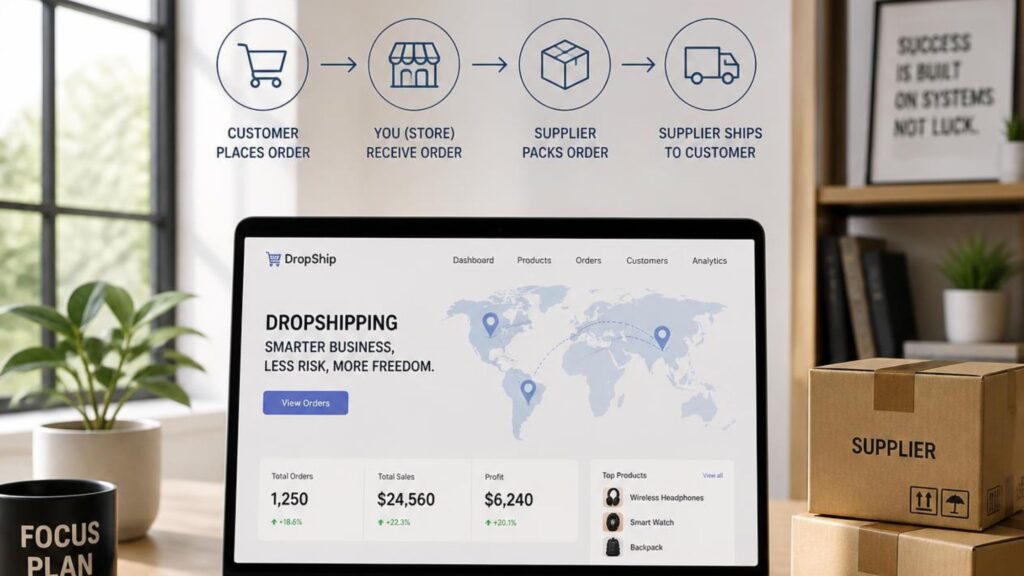
- Imagine you create an online store that mainly sells Home and Kitchen Appliances.
- You list an Air Fryer on your online store for NPR 12,000.
- A Customer visits your website and purchases the product from your Store.
- You forward the order details to your supplier or manufacturer.
- The supplier charges you NPR 4,500 + 1,200 (shipping total: 5,700).
- The supplier packs and ships the product directly to your customer.
- Then you keep the Remaining amount, i.e. 6,300 ( before deducting marketing and transaction costs)
- The customer receives the product without knowing the product is directly shipped by your supplier.
This is the basic concept of a dropshipping business.
How Does a Dropshipping Business Work?
Choose the Right and Profitable Business Niche
Choosing the right niche has become the primary and important decision to be completed before you start a dropshipping business. In fact, a niche helps your audience, your product portfolio and your brand identity. If you go for an overly broad niche, you will get lost in the competition, but with a too narrow niche, you won’t be able to find enough customers.
The perfect fit would be finding a category that enjoys constant demand, an acceptable level of competition and possibilities of differentiation. For instance, “fitness equipment” sounds too broad for the niche, while “home workout resistance bands” can become an obvious choice for the target audience.
At the same time, it is also good to take into consideration your interests in the topic – passion motivates perseverance, which, in turn, helps you move on during low sales. Use Google Trends, Amazon Best Sellers, or TikTok hashtags to identify emerging categories.
Partner with a Reliable Supplier
The supplier is at the very core of your business. It determines the quality of products, delivery speed, and the ultimate customer satisfaction. An incompetent supplier can ruin your reputation instantly, whereas a good one will help you grow easily. Always make sure to order samples to check the quality on your own.
Delivery time should also be considered since nowadays people demand that their orders arrive within 7–10 days, not weeks. The communication with the supplier is another essential element; a prompt response from him is invaluable. Websites such as AliExpress, Oberlo, Spocket, and DSers can ease this process by providing you with a list of pre-vetted suppliers, but it does not mean you have to blindly trust all of them.
Try to establish relationships, ask about the quantity of inventory, packing, and returns policy. Consider your supplier as your partner, not as a vendor. The better the relationship with him, the smoother the work becomes.
Create an Online Store
Creating an online store gives your audience or customers a first impression. Customers determine whether you can be trusted as soon as they land on your website. A messy layout indicates unprofessionalism and lack of credibility, while a clean layout gives off quite the opposite vibe. There are numerous options to choose from when setting up your store.
For example, Shopify is a great choice for beginners; WooCommerce provides flexibility and versatility; and Bigcommerce is the best platform for those who plan on growing their business. The most important thing is to think about your website’s usability — easy navigation, compatibility with mobile devices and fast load times.
Moreover, branding plays a key role here. A distinctive logo, certain colour palette, and message help make your online store look professional.
List Products you want to sell from your store
The product listing is where browsing becomes purchasing. The product listing must not only provide a description of the product; it must sell the product. You need to focus on the benefits of the product rather than its features.
For example, do not say “500ml Stainless Steel Bottle.” Say something like, “Keeps your drinks cold for 24 hours, ideal for workouts or travelling.” Use good quality images, and whenever possible, take lifestyle images, which show how the product can be used. Pricing strategies play an important role, and you should take into consideration the cost of production, the cost of shipping, and profit margins. It is also important to consider psychological pricing ($29.99 instead of $30), as well as SEO optimisation (keywords).
Your product listing is the last page the potential customer sees before making a purchase decision. The listing itself should be persuasive and informative.
Market Your Business
Customer Places Orders
Now, things start getting interesting. Customers visit your online store, select products, put them in their cart, and move on to the checkout process. This process has to be flawless; otherwise, people will leave their cart.
Also, you need to provide various payment methods such as credit cards, PayPal, and digital wallets. Send instant emails of confirmation letting your customers know that their purchase has been made. You need to be transparent by letting them know about the delivery time and return policies.
Please note that the checkout process is a part of your brand identity. You cannot control the product in case of dropshipping, but the purchasing process is entirely within your control.
Forward the order to the supplier.
Once you have received an order, it falls on you to relay the information to the supplier. There are systems that facilitate automation and thus minimise errors.
It is very crucial for you to provide accurate information because inaccurate information means inaccurate delivery, which in turn means dissatisfied clients. Automated order forwarding can be done through Oberlo and DSers, among other similar tools. Also very crucial is being transparent with your client.
Update them with information regarding the tracking of their orders and the order status. See yourself as the connecting link between the client and the supplier.
Supplier Ships the Product
Now it’s time for the supplier to take control. They will deliver the product straight to your customer, packing it along the way. However, that does not mean that your work is done. Provide shipment details immediately in order to establish credibility.
Watch how long it takes for delivery and make sure it matches customer expectations. Ask for their opinion about the supplier’s performance. Even though the physical product is handled by someone else, you are the one responsible for the customer experience. Any issues related to delay or packing will be blamed on you.
You Earn the Profit
And finally, the profit: the reward for all your efforts! Everything is simple here: you get money from your customers at retail price; the wholesaler gets his money from you at the wholesale price; and what’s left is your margin.
So, if a client pays you $60, while the wholesaler sells goods to you at $40, you earn $20 per order. Imagine that you sell dozens or even hundreds of such products – and you have a viable business! Profitability does not only mean margins, but it means efficiency as well. Cut your marketing expenses through efficient marketing channels; increase average order value through upselling and bundling; develop customer loyalty to create repeat sales. Dropshipping isn’t an easy way to make money, but you may turn it into a source of income.
Different Components of the Dropshipping Business
Suppliers or Manufacturers
Suppliers or manufacturers are considered the pillar of every dropshipping business. They produce, keep, and transport the goods to your customers. Since, as a shop owner, you will not keep the goods in stock, you will have no choice but to depend on the reliability of your supplier. The right supplier guarantees fast delivery, reliable product quality, and proper communication channels.
Conversely, the wrong suppliers delay the shipping process, give low-quality products, and even cause negative reviews that may affect your reputation. Selecting the right suppliers should be done with caution, where you have to look at the reviews, test some samples from them, and see whether they have scalability capacity.
Most dropshippers source their products from platforms such as AliExpress, Oberlo, or even private suppliers. Having a close relationship with the suppliers enables you to get better rates and priority in services.
Selection on Platform
Your platform is the place where your business operates on the Internet. It is the storefront your customers will visit, the checkout process that they will use, and the dashboard which will be used by you on a daily basis.
There are many popular platforms such as Shopify, WooCommerce, and BigCommerce, which enable users to create a professionally looking website without any coding skills. In addition, the platform will connect you to all suppliers, payment gateways, and marketing channels, thus enabling you to perform the whole process automatically.
For instance, Shopify will provide you with apps that will connect to the supplier and forward the customer order immediately. Your platform will determine customer trust because the nicer the website looks and the easier it is to navigate, the better conversion rate it will have. Finally, platforms offer analytical tools that will help you monitor sales, customer behaviour, and marketing campaign performance
Choosing the Right Payment Method
The payment system is what connects your clients to your money. With the help of such services, your buyers will be able to make payments safely and quickly.
The most popular payment gateways are PayPal, Stripe, and others, based on your location. It is vital to provide your customers with a smooth payment process because this way you will establish trust with them. In case the payment system is working poorly or suspiciously, then customers will simply refuse to make payments. Payments are also protected against fraud with the help of transaction verification and chargeback protection.
For dropshippers, it is important to use payment systems which integrate easily with the platform and offer support for multiple currencies. Another important characteristic of the payment gateway is the fees because sometimes certain services have higher transaction fees. Customers appreciate multiple payment options, which increase conversion rates. In other words, payment systems are not only technical solutions but trust builders as well.
Store Owner (You)
The owner of the online store is like the captain of a ship. The suppliers deal with the goods and the delivery of the goods, while the owner deals with the branding, customer interaction and overall strategy. The role includes selecting the right niche, designing the store, pricing and managing effective marketing campaigns
Moreover, you have to provide customer service by answering inquiries, resolving complaints and building trust. Dropshipping offers you an opportunity to avoid managing the inventory, unlike conventional retail, but at the same time requires you to be quick-thinking and flexible.
You should constantly analyse trends, optimise advertisements and alter the strategy in order to be profitable. In many aspects, you will be representing your business yourself. The customer does not contact the supplier but your store and interacts with you only.
Marketing
Marketing is what brings traffic to your store. If there is no marketing, all the best products won't even be noticed. In case of dropshipping, marketing is very important: ads on social networks, cooperation with influencers, SEO and email marketing. Ads can be done through social networks (Facebook, TikTok, Google), as it helps target the right audience precisely.
Still, ads cost money, and you need to keep it in mind and take it into account when calculating the profit margins. Organic marketing is about making quality content and optimising your store for search engines. There is also an option of using influencer marketing to promote the product: collaboration with the person who shows it.
The main thing about effective marketing is knowing your target audience and its preferences and desires. Marketing is not only about selling but telling the story about the product or a company. Customers will be more willing to buy if they feel an emotional connection with the brand.
Customer Service
Customer service is the place where trust can be earned—or broken. As you do not have any control over shipping, customers will contact you when there are any problems with delivery, damaged items, and other concerns. It is up to you how you will react and either keep customers loyal or receive bad reviews.
Good customer service means responsiveness, empathy, and willingness to solve problems. Providing good communication and a simple return policy builds trust in your company. Many dropshippers automate routine work and employ chatbots or auto-replying emails to solve typical concerns; however, human interaction is necessary in case of more complicated issues.
Keep in mind that the supplier does not matter to the customers—they contact you. If the supplier made a mistake, then you are responsible for solving this issue professionally. Great customer service means that even problems can become an opportunity to turn dissatisfied customers into loyal ones.
Legal
However, legal aspects often go unnoticed, but they are critical for any business to succeed. Being involved in the dropshipping niche means you have to pay taxes, follow consumer laws, and register your business legally. Depending on your country, you may need to register your company, collect sales tax, or follow some international business rules.
Return and refund policies should also be clear and meet the requirements of consumer protection laws because customers have their rights. Not taking care of legal issues can result in fines, litigation, or even the closure of your online store. Moreover, legal aspects not only regulate your actions but also can serve as protection for you. For example, contracts with suppliers can guarantee that they will fulfil all their obligations to you, and proper business registration will increase trust among customers. Privacy laws such as GDPR will help you protect your client data.
Traditional Retail Business vs Dropshipping Business
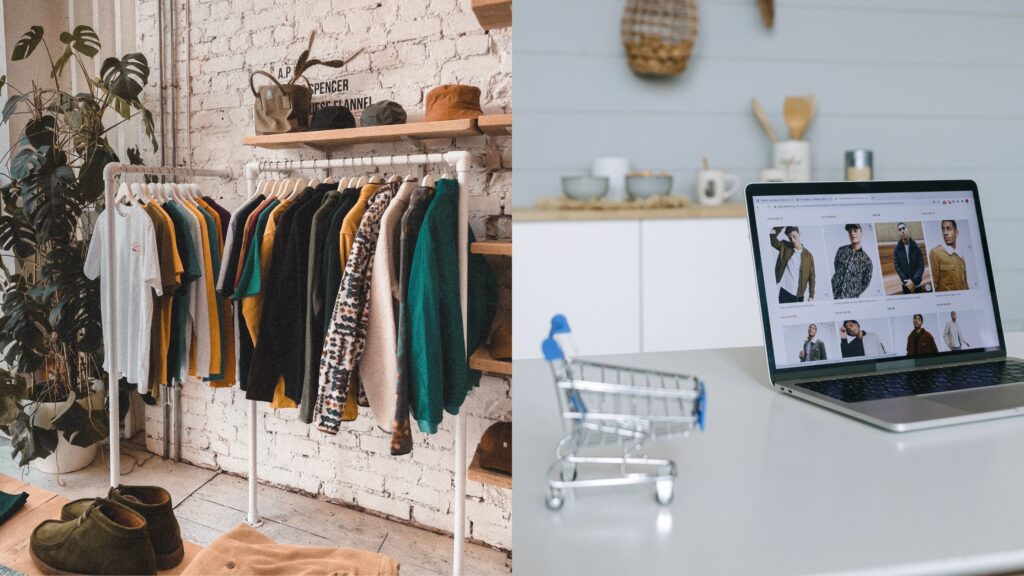
Traditional retail and dropshipping each have their strengths and weaknesses. You can select which model to adopt based on your financial capacity, the goals you have for your business, experience level, and how much you are willing to take risks. Traditional retail gives more control over products and customers, but dropshipping is a cost-effective way for newcomers to set up an online business.
For someone intending to establish a business in Nepal, it is important to have information about these two models.
Traditional Retail Business
Traditional retail business is the most prevalent form of business in Nepal. The owner of the business buys goods from wholesalers, distributors, or manufacturers, keeps them in a warehouse/shop, and sells them to consumers.
Traditional retail businesses in Nepal may be listed as follows:
- Mobile phone shops
- Fashion/garment shops
- Groceries
- Electronics shops
Under this concept, the retailer will own the inventory before selling it. Thus, they will have to spend their money upfront in buying the products and manage the stock, storage, packaging, and customer support.
As an illustration, if you own a mobile accessories store in Kathmandu, you may buy 500 pieces of phone cases from the wholesalers, keep them in your store, and sell them separately to your customers. In case any particular design is not sold, then the loss will be on you.
Even though this concept involves higher initial spending, it enables you to have full control over the quality and price of your products.
Dropshipping Business
Dropshipping is a modern online shopping model where you can sell items without buying the goods in advance.
Rather than holding your own inventory, you connect with a vendor. Once you receive an order from your customers through your website, you pass the order to the vendor. The vendor packs and sends the item straight to the customer.
In other words,
Customer → Your Website → Vendor → Customer
Your profits are the difference between the selling price and the vendor’s cost of the goods sold.
For instance, if you set up a Shopify or WooCommerce site offering video gaming products, your client purchases a video gaming keyboard for NPR 4,500. Your vendor sells the product for NPR 3,500. After sending the order to the vendor, he ships the product to the customer, and you make NPR 1,000 profit (before any marketing and payment fees).
The beauty about this business model is that you do not have to buy the items before selling them. This makes dropshipping a popular choice for students, freelancers, and new entrepreneurs in Nepal.
Can You Start a Dropshipping Business in Nepal as a Beginner?
The answer is yes !!!, you can start your dropshipping business in Nepal. There is no regulation that prohibits people from running an online store under the dropshipping format. As long as you follow all the regulations related to business, consumers’ rights and taxes, dropshipping will be a legitimate way to conduct online business.
The main benefit of this type of online business is the lack of the need to make a significant investment in a warehouse where the goods will be stored. You will be able to concentrate on the development of the online shop, attracting customers and finding trustworthy suppliers of the goods.
The growing popularity of e-commerce businesses in Nepal also creates new opportunities for businesses. People become more willing to buy products via websites and social networks. Digital payments create additional comfort for online shopping.
Whether you are going to sell your goods to the local population or to foreign customers, dropshipping will let you start the business from scratch and then develop it gradually.
Why Dropshipping Business is Popular in Nepal?
Low Investment Cost
In traditional business or retail businesses, to start, you need a lot of investment costs, including purchasing stock, renting shop space, furniture, staff, etc. Such costs pose a huge obstacle for beginners.
To start a dropshipping business, you do not need to make any huge investment since the products are bought only when there is an order from a customer. Thus, entrepreneurs can begin their business activity with minimal investments, mainly related to the following costs:
- Domain Name: .com.np (Free in Nepal) TLDs: .com – NPR 2500/Year
- Web Hosting: Shared Hosting
- Marketing Budget
- Branding
- Internet Connection
As the business does not require purchasing inventory in advance, the overall financial risk is low.
Increasing Internet Access
In recent years, there’s been rapid growth in internet connectivity in Nepal.
According to DataReportal, published on November 8, 2025, it states that-
- Around 16.6 million people were connected to the internet in Nepal as of December 2025, when internet usage had reached a rate of 56%.
- In Nepal, as of December 2025, there were 32.4 million cellular mobile subscribers, which is equal to 109 per cent of the total population.
- The total number of social media users in Nepal as of October 2025 was 14.8 million, accounting for 50.0 per cent of the total population.
These reposts clarify that there is a high growth chance for your dropshipping business in this new digital business world.
Also, the affordability of smartphones, as well as the availability of broadband and better mobile internet connectivity, has allowed many individuals to use online shopping websites.
The increase in internet access also helps the rise of consumers discover products through Google search, Social Media, Video and Blog content, and online marketplaces
No Required for Inventory Management
Inventory management is one of the most difficult tasks of traditional retailing. It includes forecasting demand, controlling stock, storing the inventory, and dealing with faulty or unsold goods.
With dropshipping, the seller gets rid of all these tasks, as the supplier does all of them. The seller just lists the product in the store and sends customers’ orders to the supplier.
This makes dropshipping convenient for new entrepreneurs from Nepal who can spend less time on managing the inventory and more time on other aspects of business.
Rise of Social Media Marketing
Social media sites have turned out to be very useful marketing channels for Nepalese businesses. Social media sites including Facebook, Instagram, TikTok, and YouTube help business people market their goods, interact with their customers, and create brand awareness.
It is possible for dropshipping businesses to connect with thousands of prospective customers through marketing channels without spending lots of money in advertising. It is usually the case where creative marketing and demo videos are used and lead to high conversion rates.
This has led to the creation of many dropshipping enterprises by young entrepreneurs in Nepal.
Opportunity to Sell International Market
With dropshipping, Nepalese entrepreneurs can sell the items of overseas suppliers without bringing in their stock in bulk. This means that there are thousands of products available in a range of categories like electronics, fashion items, beauty items, home decor products, fitness equipment, pet accessories, and others.
This means that the seller does not need to make a large investment while trying to import the goods and find profitable niches.
Moreover, selling unique international products can be helpful for making an online store distinctive from its competitors.
Flexible Work-from-Anywhere Business Model
The other big factor contributing to the success of dropshipping is the flexibility of the business model. As it is conducted online, the store can be run from the comfort of home, office, or even during travel.
Most tasks such as managing the products, offering support to customers, marketing, and handling orders can be done using a laptop and internet connection.
Such a flexible business model makes dropshipping a very appealing choice for students, freelancers, homemakers, and those seeking to earn some extra money besides their regular work.
Benefits of Starting a Dropshipping Business in Nepal for Beginners
Dropshipping is one of the easiest ways to do online business for beginners around the world, and Nepal is no exception. With the increase in the use of the internet, smartphones, digital payments, and the understanding of e-commerce, more Nepalese entrepreneurs are looking into dropshipping as a way to start their online business with lower costs.
Unlike other retail methods, dropshipping gives you the advantage of selling products without having them beforehand. This means that you don’t have to invest a lot of money to start your own business. Dropshipping allows students, freelancers, employees, and other Nepalese entrepreneurs to practice e-commerce by doing business.
However, being successful needs hard work, marketing, and good customer service, but there are many benefits for beginners.
Here are some Benefits of Starting a Dropshipping Business in Nepal for Beginners.
- Start with Minimum Investment
- Do not require Purchasing Inventory
- Lower Financial Risk
- Can Work Anywhere from Home
- Easy to Start and Scale
- Growing E-commerce Market in Nepal
- Opportunity to Learn Digital Marketing
- Large Production Selections
- Earlier Product Testing
- Potential to Build a Long-Term Brand
Challenges of Starting a Dropshipping Business in Nepal for Beginners
Choosing the Right Suppliers or Manufacturers
The biggest problem in drop shipping is locating good suppliers that supply products regularly and consistently.
Should your supplier supply you with damaged products or be late in supplying your products, your business will be held accountable.
This becomes very critical for entrepreneurs who are trying to venture into the Nepalese market.
Limited Local Dropshipping Suppliers
Unlike other nations such as the US, China, and India, Nepal has very few suppliers who cater to dropshipping.
Local wholesalers also require the business to buy their products in bulk quantities instead of meeting individual orders.
Therefore, many entrepreneurs in Nepal tend to import products from abroad, thus increasing delivery time and making the process difficult.
Shipping and Delivery Days
Delivery time plays a significant role in determining the customer’s satisfaction.
Foreign suppliers may need several days or weeks to deliver goods due to customs and couriers. In Nepal, customers normally prefer quick delivery of their purchases, particularly when the products purchased are those which are needed on a daily basis.
Limitations on Payment Gateways
The digital payment ecosystem in Nepal has been enhanced by the availability of services like eSewa, Khalti, Fonepay, and QR codes offered by banks; however, receiving payments from abroad and integrating global payment gateways may sometimes be more difficult compared to some other nations.
When selling to customers from abroad, it is advisable that you conduct thorough research on payment options and foreign currency laws.
High Competition
Since there is a lower barrier to entering dropshipping, many sellers can sell the same kind of products.
When several companies market their goods with the same features, selling based only on prices can be tough.
However, a newcomer should concentrate on:
- Establishing an authoritative website.
- Offering exceptional customer service.
- Creating unique product descriptions.
- Making quality content.
- Providing appealing bundles and discounts.
- Ensuring positive reviews and clear policies
A successful brand beats being cheap.
Building Customer Trusts
E-commerce is becoming more popular in Nepal, yet there are quite a few consumers who are hesitant to buy from unknown websites.
The consumer may ask questions like:
- Is this site real?
- Will my order arrive?
- Is it the same as in the pictures?
- What if it is broken?
To gain their trust, your website should have:
- Contact details
- Refund policy
- Payment protection
- Testimonials
- Quality product pictures and descriptions
Trust is one of the most valuable resources that your company can have.
Marketing Costs
A website does not ensure that you will have traffic.
The majority of dropship stores use digital marketing strategies like Facebook, Instagram, Google Ads, SEO, and content marketing to drive sales.
The advertising expenses may soar rapidly due to bad targeting or product validation. Newcomers should spend their money in small amounts, examine the results, and improve the campaign gradually.
Do You Need to Register a Business?
Many beginners are often confused about whether to register the business prior to starting a dropshipping store.
This decision would depend on the size of the business and the regulatory requirements involved.
Some people would start by assessing the demand for the product before proceeding to register the business. As the business gains traction and starts generating income, there could be several advantages to registering the business.
- Increased Credibility
- Easier access to Banking Services
- Ability to Work with Business partner
- Better Record Keeping
- Compliance with Tax Regulations
- Opportunities to work with larger companies
Dropshipping Business in Nepal Guidelines
Starting a dropshipping venture in Nepal can be an amazing idea for entrepreneurs willing to join the e-commerce world without having to invest huge amounts in stock. As opposed to the regular retail venture, dropshipping enables one to sell products on the internet while the supplier takes care of stocking, packaging and sending them directly to your clients. Nonetheless, running a successful dropshipping venture isn’t easy. It calls for proper planning, research, credible suppliers and marketing strategies. Knowing the appropriate rules prior to launching your venture will enable you to make the right moves.
The very first rule when it comes to establishing a dropshipping business in Nepal is having knowledge about the local market and choosing the appropriate niche. Most of the newbies fall into the trap of offering numerous products, regardless of whether they are related to each other or not, thinking that in this way they will be able to reach more people. However, targeting a particular niche such as gaming accessories, home appliances, beauty products, fitness equipment, kitchen appliances, and mobile accessories will help you address the needs of your target audience better. Prior to the choice of goods, investigate what Nepali people are looking for, study your competitors, and offer some solutions to their problems.
Yet another significant rule to follow in this context is the need to deal only with reliable suppliers and develop a professional online store. As the suppliers are the ones that will take care of storing and transporting the products, their effectiveness will definitely influence your reputation. So it is necessary to cooperate with those suppliers that can supply you with quality products, have accurate stock control, and send your orders on time. However, at the same time, one needs to pay special attention to building an attractive e-commerce website by means of such platforms as WooCommerce or Shopify.
Lastly, treat dropshipping as a legitimate business rather than something that will earn you easy money in a short time. Concentrate on building your brand through SEO, social media marketing, paid advertisements, email marketing, and content marketing. Make sure that you provide top-notch customer service as well by answering your customers’ queries and resolving their grievances professionally. Keep an eye on your sales, website traffic, and marketing performance on a regular basis to enhance your efforts. As you grow your business, think about keeping the best-selling products in stock locally so that you can provide faster deliveries to your customers.
Dropshipping Business in Nepal with Latest Updates
The dropshipping sector of Nepal has come a long way in the last couple of years due to the fast advancement of internet connectivity, mobile phone usage, and online shopping culture. People have become more confident in buying their required goods via e-commerce sites or social media channels, which has opened doors for many new businesses to come up. Nevertheless, the business environment is also changing due to evolving customer needs, improved digital payment methods, and enhanced logistics facilities. Every individual wishing to do dropshipping in Nepal needs to keep themselves aware of all the changes.
One of the major developments has been that people in Nepal have started to embrace the concept of online shopping. People are increasingly open to buying products through dedicated websites instead of just depending on physical outlets. Social media sites including Facebook, Instagram, and TikTok have emerged as strong marketing tools for companies to sell their products and communicate with consumers. Moreover, digital modes of transaction, including eSewa, Khalti, Fonepay, and bank transactions using QR technology, have ensured faster and easier transactions within the country. These changes have resulted in a conducive atmosphere for entrepreneurs looking to establish their online business.
Other updates include improvements in logistics and courier services in Nepal. These delivery services reach many urban and semi-urban territories much faster and more effectively compared to those of the previous period. Consequently, entrepreneurs can reach out to their potential buyers throughout Nepal easily. In addition, customer expectations have grown. They demand accurate product descriptions, fair prices, effective tracking of order status, and prompt delivery. Businesses that are communicative and offer good customer service are able to earn repeat purchases and positive reviews. Finally, entrepreneurs selling products overseas need to know about changes in rules for payments, customs regulations, and requirements for business registration.
Nevertheless, there is increasing competition in the dropshipping industry. The number of businesses grows, and it is no longer possible to become successful by selling ordinary goods at low prices. Today, entrepreneurs require a professional image, unique products or sets of products, publication of useful information, search engine optimisation, and trustworthy relations with customers. Entrepreneurs who monitor current market trends, constantly update their marketing approaches, and work on their customer experience will be more successful in Nepal.
Dropshipping Business in Nepal Means
A dropshipping business in Nepal involves opening an online store where you can sell the products without having to buy and store inventory. A dropshipping business does not involve having a warehouse full of products but rather involves teaming up with suppliers who store the products in your name. Every time there is an order by the customer through your website, you send the order to the supplier who packages the product and sends it straight to the customer. All you need to do is market the products, run the online store, and communicate with the customers.
Simply put, dropshipping involves revolutionising the business approach. In traditional business approaches, one spends money to buy the products first before selling them. This involves having the inventory and the space to store it. But in dropshipping, you only buy the products once the customer orders and pays for the product. Hence, this lowers the risk of making losses since you will not be spending money on inventory that might go unsold. This makes dropshipping appealing, especially to students and people just starting out with no money in Nepal.
For instance, suppose you set up an online store selling accessories for games. Your client located in Kathmandu makes a purchase of a gaming mouse via your website. You do not send the goods; rather, you pass the order on to your supplier, who packages it and sends it straight to your customer. In this case, your profit is the difference between the price at which the client purchased the goods and the price you have paid to your supplier, minus such costs as advertising, maintaining the website and processing payments. Throughout the transaction, the client sees your online store as the merchant; hence, customer service and communication belong to you.
Speaking about dropshipping in Nepal, it is not only an affordable way to launch a business, but also the chance to become part of its fast-growing digital economy. With more consumers using the Internet for shopping and paying digitally, it is possible to start a business serving clients living in different cities without having any brick-and-mortar outlets. However, it all depends on choosing the right suppliers, knowing the tastes of your clients, offering outstanding service and constantly working on the improvement of your marketing and brand.
What Are My Thoughts on Dropshipping Business in Nepal for Beginners
Based on 8 years of experience in the online business field, the answer to this question for me is always one and the same, i.e. yes, but this business benefits when you deeply understand how it works in reality. I can say that there were many people who managed to succeed and a lot more who just gave up within the first couple of months. The main problem was that beginners entered this field with hopes of making fast bucks.
My introduction to online entrepreneurship began with a physical business, “ Home and Kitchen Appliance”, later starting blogging and affiliate marketing. From these activities, I learned many important things related to digital marketing, SEO, content writing, consumer behaviour, and online reputation. As soon as I got involved in the world of dropshipping, I came to understand that it involves all these skills in one single form of business. Dropshipping is more than just listing items and expecting sales; it is a process involving much more.
For newbies in Nepal, the dropshipping business offers a rare chance since one gets an opportunity to conduct business online without having to put in a lot of money as inventory. Nevertheless, one will also have to contend with companies from other parts of the globe. Success here comes from knowing the market, choosing the correct products, working with credible suppliers, and offering great customer service.
From my experience over the years, I have come to learn that dropshipping is not a get-rich-quick scheme. This is a genuine business that rewards those who are patient, consistent, and make sensible decisions.
It soon became clear when I started dropshipping that social media can sometimes give a wrong impression. There are many videos about dashboards with thousands of dollars in sales per day, yet very few talk about the activities that happen behind the scenes.
Building a successful dropshipping business demands daily activity.
You have to conduct product research, watch suppliers, optimise your website, test ads, communicate with customers, track orders, and constantly improve your marketing campaigns.
Not all products become top-sellers.
Many products fail until you find the product that sells well. And this is absolutely normal and expected, which should not surprise anyone.
What Are My Thoughts on Dropshipping Business in Nepal for Beginners
Based on 8 years of experience in the online business field, the answer to this question for me is always one and the same, i.e. yes, but this business benefits when you deeply understand how it works in reality. I can say that there were many people who managed to succeed and a lot more who just gave up within the first couple of months. The main problem was that beginners entered this field with hopes of making fast bucks.
My introduction to online entrepreneurship began with a physical business, “ Home and Kitchen Appliance”, later starting blogging and affiliate marketing. From these activities, I learned many important things related to digital marketing, SEO, content writing, consumer behaviour, and online reputation. As soon as I got involved in the world of dropshipping, I came to understand that it involves all these skills in one single form of business. Dropshipping is more than just listing items and expecting sales; it is a process involving much more.
For newbies in Nepal, the dropshipping business offers a rare chance since one gets an opportunity to conduct business online without having to put in a lot of money as inventory. Nevertheless, one will also have to contend with companies from other parts of the globe. Success here comes from knowing the market, choosing the correct products, working with credible suppliers, and offering great customer service.
From my experience over the years, I have come to learn that dropshipping is not a get-rich-quick scheme. This is a genuine business that rewards those who are patient, consistent, and make sensible decisions.
It soon became clear when I started dropshipping that social media can sometimes give a wrong impression. There are many videos about dashboards with thousands of dollars in sales per day, yet very few talk about the activities that happen behind the scenes.
Building a successful dropshipping business demands daily activity.
You have to conduct product research, watch suppliers, optimise your website, test ads, communicate with customers, track orders, and constantly improve your marketing campaigns.
Not all products become top-sellers.
Many products fail until you find the product that sells well. And this is absolutely normal and expected, which should not surprise anyone.
Customer trust was another very important lesson.
Considering the increasing digitisation of the economy in Nepal, I think there are more possibilities for dropshipping now than ever before.
The usage of the Internet keeps increasing, more and more people own smartphones, and more people get accustomed to online shopping.
Young entrepreneurs are also learning digital marketing much faster than the previous generation did.
This means that there are great conditions for establishing online businesses.
Nevertheless, Nepal also faces some issues that all beginners should be aware of.
There are some limitations regarding international payment gateways available to many people. Shipping can be slower than you might expect. There can be some issues related to customs duties, and international competition keeps growing.
However, these challenges do not make dropshipping impossible.
They only mean that better planning is needed.
I think that if beginners put their effort into learning rather than expecting overnight success, they will succeed.
Is Dropshipping Easy?
According to my own experience, the answer is no.
It is quite simple to comprehend yet hard to implement in practice.
Setting up a shop can take just a couple of days.
Making money from it requires several months of work.
There will be unproductive ad campaigns.
There will be items that never sell at all.
There will be customers who will ask challenging questions.
There will be various other troubles.
All these things happen to any entrepreneur.
The individuals who will eventually be successful are the ones who persevere.
Conclusions
In my view, dropshipping will always be among the easiest ways for newbies in Nepal to enter business.
The key selling point of dropshipping is starting a business with low costs while gaining experience in doing digital business. But I do not advise getting into this type of business thinking about making quick money. Dropshipping should be seen by those who want to study the market, learn about consumers, improve their marketing skills, and take each transaction seriously as a chance to establish a good relationship with the customer.
If one decides to get into dropshipping with patience and dedication, this business can go far beyond just an additional source of earnings. This type of business can become the foundation of developing your own brand, producing private labels, establishing several eCommerce stores, or even creating a digital business of your own. Based on my personal experience, this is exactly how things work in practice. For beginners in Nepal, this is what I would suggest trying.
Frequently Asked Questions (FAQs)
Indeed, it is viable to establish a drop shipping business in Nepal. Owing to the exponential growth of internet penetration rates, usage of smartphones, online payment methods, and online shopping, several entrepreneurs have managed to start their drop shipping business without having to spend heavily on huge inventories. This kind of business model ensures that you conduct your sales over the internet, while the supplier takes care of the logistics of storing the products, packing them, and delivering them to the customer.
Yes, dropshipping is legal in Nepal as long as your business observes the laws and regulations.
A dropshipping business is nothing more than an order fulfilment strategy. In itself, it doesn’t include any forbidden products or any other activities.
However, the legality is determined by how you start and run your business.
- Sell genuine and lawful products.
- Provide accurate product descriptions.
- Respect Consumer Right
- Follow applicable tax requirements.
- Maintain transparent pricing
- Honour refund and return policy
- Avoid misleading advertising
There are several platforms to consider when you want to begin a dropshipping business in Nepal, and the most commonly used platforms include WooCommerce, Shopify, and BigCommerce, where entrepreneurs can set up professional websites that do not require holding any stock of physical goods. WooCommerce is more preferred by many people owing to the fact that it is designed on WordPress, can be completely customized, it is SEO friendly, and it is cost effective, and thus it suits businesses for a long time. Shopify is another great platform for dropshipping beginners due to the fact that it is user-friendly, it uses secure hosting services, it has built-in features for e-commerce, and it is compatible with different dropshipping applications. Entrepreneurs can use other platforms like Facebook Shops, Instagram Shops, and TikTok for the promotion of their products, and online marketplaces can also be used to increase the visibility of their products. However, use of these tools alone is not advisable. Having a dedicated website is better since it allows entrepreneurs to have greater control over branding, customer data, products and future scalability.


